

Squirrel!
Warm weather has finally come to our fair haven! For those of us who traveled the bike path through the cold months, it takes some adjusting to get used to the crowds along the route we used to have to ourselves. You can tell the noobs—they’re the ones who jump into the passing lane when you audibly signal before passing. Like the baby squirrels juking themselves into car wheels on Green St. But it’s all good. We ride slowly when people are around, figure it out, and greet new friends. And with the increased number of people walking and biking around town, I’ve also heard a few more complaints about that scourge of humanity...They’re worse than cat-eating fishers. More reprehensible than snowboarders. More deadly than a cocktail of Pop Rocks and Coke. We got trouble, folks, right here in River City, trouble with a capital "T" and that rhymes with “E” and that stands for… eeeeee-bikes!
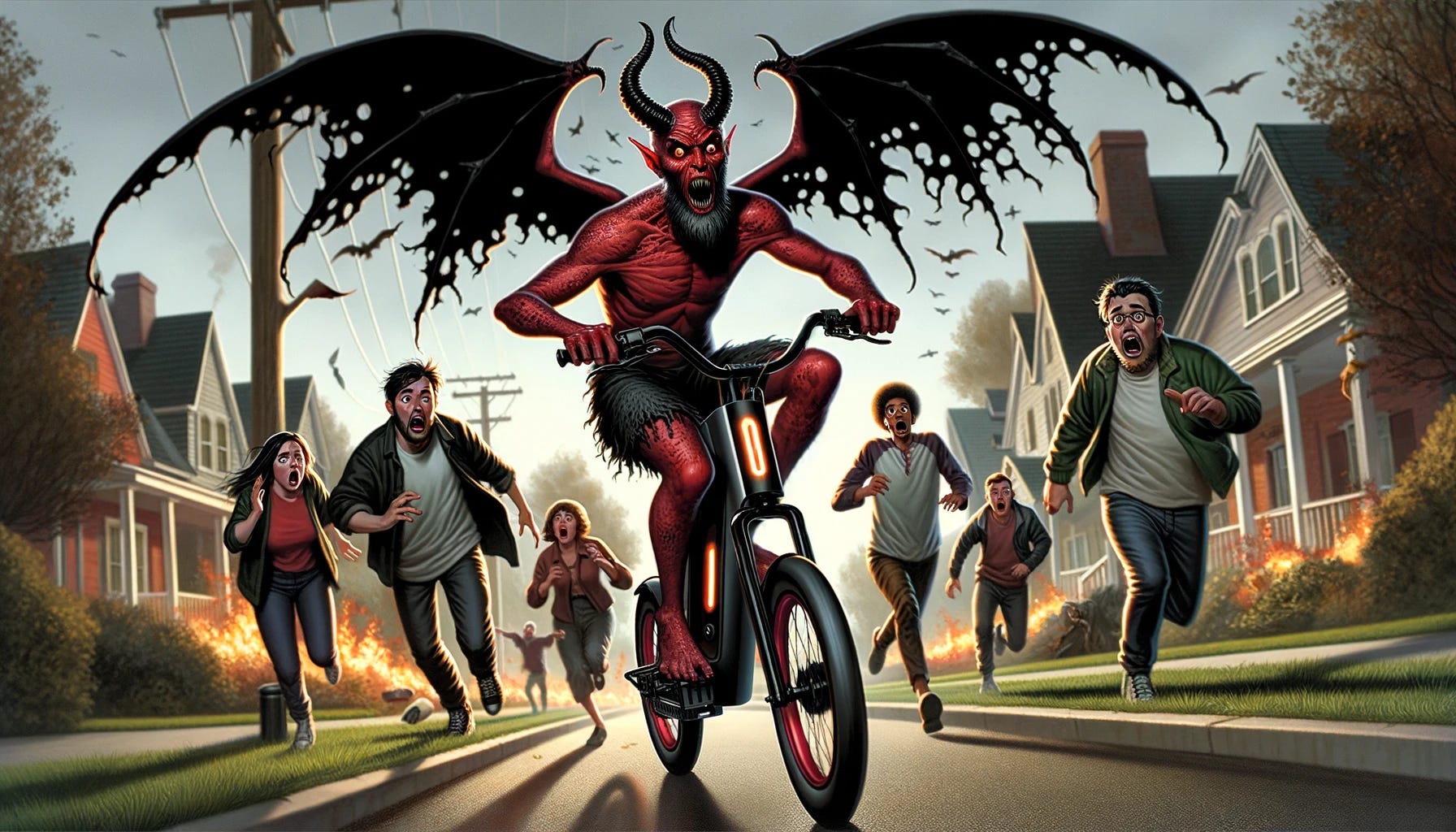
Scare-E
The general complaint, as I’ve heard it, is that e-bikes go too fast and pass too closely to people and dogs. Some have gone as far as to say that these bikes shouldn’t be allowed on the bike path. As someone who walks a lot, I sympathize with my neighbors who complain about the rise of e-bikes. Like them, I want there to be less conflict between the growing number of people on e-bikes and people who are walking. I’m even open to regulation (more later) of certain types of e-bikes in certain areas. All of this provided that we do it in a way that encourages e-bike riding.
A general shift to e-bikes will be good for us all. Why? First off, mobility. E-bikes get more people out and about! I was talking to fellow e-bike rider ML Baron about this recently. As ML notes, “e-Bikes have allowed many to get out that otherwise would be stuck indoors due to a minor disability.”
After we talked, ML sent me a message noting that he’d just passed two frequent e-bikers in town—one is 85 years old, and the other just turned 75. Many seniors can’t drive. Some can drive but maybe shouldn’t. E-bikes offer many older folks, younger folks, and disabled folks an alternative to being stuck at home or waiting on rides. They allow more people to frequent local businesses in a way that doesn’t add to traffic congestion, air pollution, or noise pollution and that doesn’t take up those precious parking spots.
Given the real concerns of some neighbors, it does make sense for those of us who think it’s a good idea to encourage the use of e-bikes (and biking more generally) to be proactive about discouraging conflict between e-bikes and others. There are a few sensible steps the town can take in the coming years to ensure that the shift toward e-bikes (and other forms of micro-mobility) goes smoothly and doesn’t result in a counterproductive backlash.
A quick sidebar on e-bike classes for those of you who are unfamiliar. There are three federally-recognized classes of e-bike1:
Class 1 E-Bikes
Description: Pedal-assist only, where the motor provides assistance only when the rider is pedaling.
Speed Limit: The motor ceases to provide assistance when the e-bike reaches 20 mph.
⠀Class 2 E-Bikes
Description: Throttle-assisted, meaning the motor can provide assistance regardless of whether the rider is pedaling or not.
Speed Limit: The motor ceases to provide assistance when the e-bike reaches 20 mph.
⠀Class 3 E-Bikes (Not yet recognized in MA)
Description: Pedal-assist only, similar to Class 1, but with higher speed capabilities.
Speed Limit: The motor ceases to provide assistance when the e-bike reaches 28 mph.
Mrs. G and I ride Class 1 e-bikes. ML rides a Class 2, which just means that he has a throttle (handy when you’re starting from a standstill at a light). Most of the e-bikes you encounter around town are going to be either Class 1 or 2. Classes 1 and 2 are recognized by the state of Massachusetts, where they’re given most of the same privileges and have to follow most of the same restrictions as acoustic bikes.
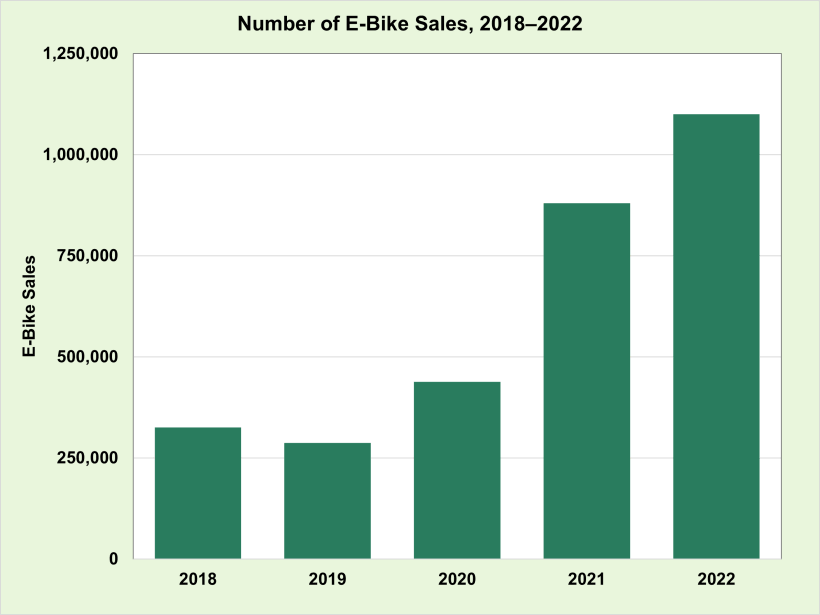
Preparing for the E-pocolypse
One policy shift that probably makes sense is prohibiting anything above a Class 2 bike from using the bike path. I hesitate to suggest this lest I’m labeled a bike banner! Given that the bike path is considered a multi-use trail, these bikes are technically already prohibited there by state law. We should probably make that more explicit and enforce it as needed. This will keep bike speeds down to what feels safe for everyone on the path, which will only become more popular and crowded in the coming years. That said, being strict about this only makes sense if we’re willing to make sure our streets are safe enough for people riding Class 3+ e-bikes. That brings me to the #1 thing we should be doing to prepare for and encourage the rise of e-bikes: Ensure that ALL of our neighborhood streets are designed for safe driving speeds.
How slow is safe? Amsterdam recently dropped the default speed limit for city streets to 30 KPH (18 MPH). That’s about where ours should be. Given what people are used to, I realize that this might be a stretch. I’d settle for a firm 20 MPH (not like 10 MPH above it). Slowing all of our streets is the most important thing we can do to increase livability and safety for everyone using them. For people riding e-bikes, it would mean they could comfortably ride in the street, leaving sidewalks clear for people walking. Less noise, less pollution, fewer flipped cars in peoples’ yards, higher property values everywhere— there’s so much upside to this.
For roads in town where these slow speeds are not feasible, the town should be on the hook to provide protected bike lanes. If this sounds like a lot of bike lanes, note that we’re only talking about four corridors (that I can think of): Route 6, Sconticut Neck Road, Main St., and Alden Road. If you think that sounds expensive, consider that the excess asphalt those lanes would put to use is already draining town resources and making us less safe when we walk, drive, and bike.
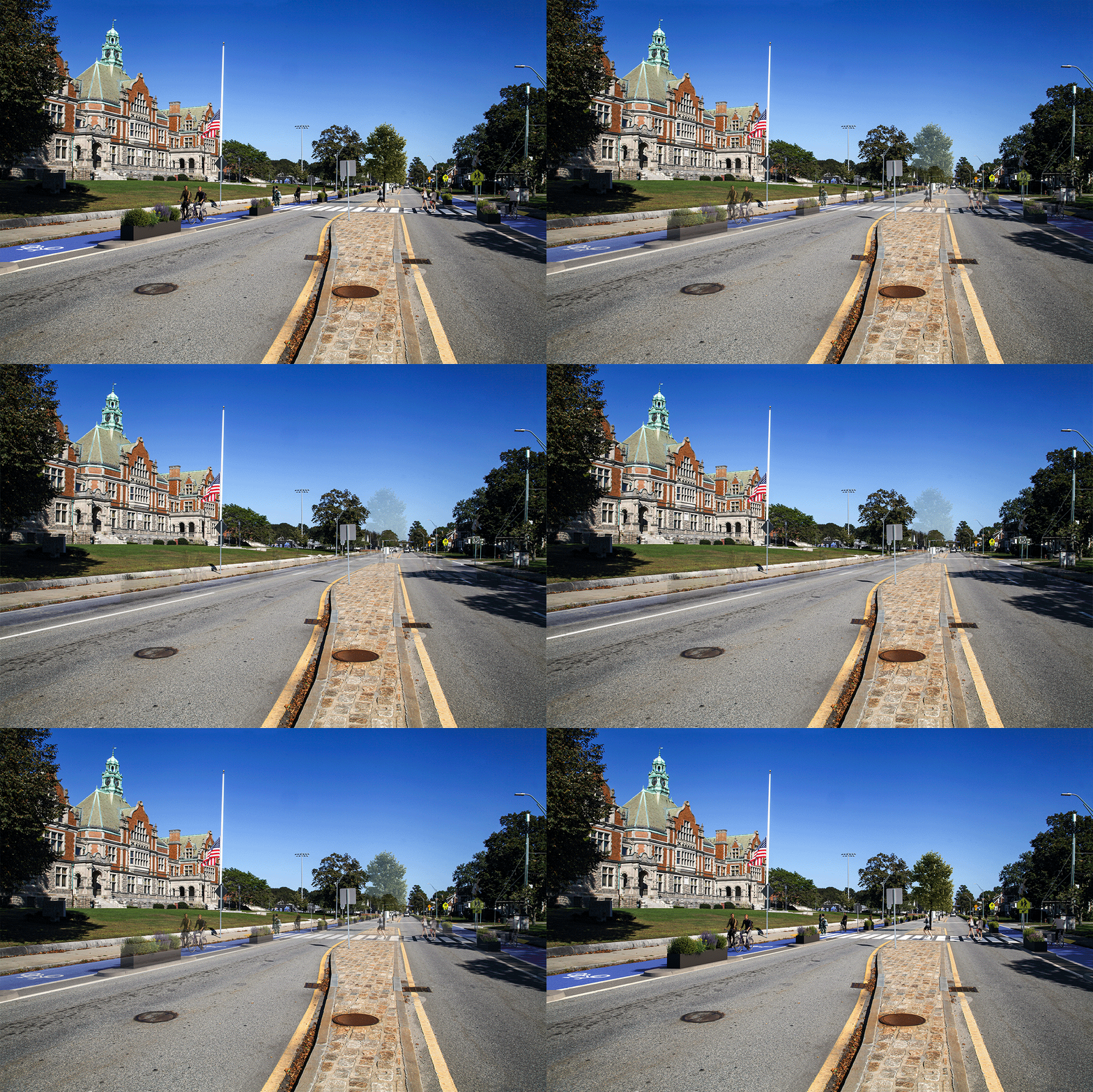
This is not a proposal to immediately lower town-wide speed limits to 20 MPH. Without effective design updates, a shift like this would be unenforceable and would only serve to frustrate drivers. We need to tighten up the street design first: quickly and cheaply testing ideas and copying what works across neighborhoods. Once the right design is in place, posted limits can be enforced to catch the <5% knuckleheads.
E-bikes are a new tool that will continue to be adopted by a wider range of people. This is a good thing. To prevent conflict between e-bikes and others, we need not attempt to put this genie back in the bottle. Rather we need to reimagine how we use our streets to accommodate a more inclusive mix of people. Doing this will enrich us all.
I love the graphic adding trees and a bike lane to the wide lonely road. It looks so safe and inviting. It would encourage more people to get outside.
Excellent article, thank you!